Seasonal Plumbing Guide
How to Winterize Your Cabin in Pine or Strawberry, AZ

If your cabin in Pine or Strawberry sits empty for weeks at a time during winter, a few hours of prep now can save you from a frozen, burst pipe later.
At nearly 6,000 feet of elevation, Pine and Strawberry see hard freezes long before the rest of the Valley even thinks about a jacket. Cabins that aren’t actively heated and monitored are especially at risk, since a single night in the teens is often all it takes for an unprotected pipe to split.
Here’s what actually needs to happen before you close up your cabin for the season.
Why Cabin Plumbing Freezes Faster Than You’d Expect
Cabins in this area tend to have longer, more exposed plumbing runs than a typical suburban home — crawl spaces, unheated basements, and pipes that travel through exterior walls or under raised decks. Combine that with the elevation and you get colder ground temperatures, more wind exposure, and fewer heat sources keeping the pipes above freezing when no one’s around.
A furnace left on a low setting helps, but it isn’t a complete plan on its own. If a breaker trips, propane runs out, or a storm knocks out power while you’re back in the Valley, an unwinterized system has no backup.
Step 1: Shut Off the Main Water Supply
Before doing anything else, locate your main shutoff valve and close it. This stops water from continuing to feed the system while you drain everything downstream.
If you’re not confident where your shutoff is, or it hasn’t been tested in a while, this is worth confirming before the first hard freeze rather than during one.
Step 2: Drain the Entire System
Once the main is off, open every faucet in the cabin, including outdoor spigots, to let gravity clear the lines. Work from the highest point in the cabin down to the lowest, and don’t forget:
- Kitchen and bathroom faucets, both hot and cold
- Showerheads and tub spouts
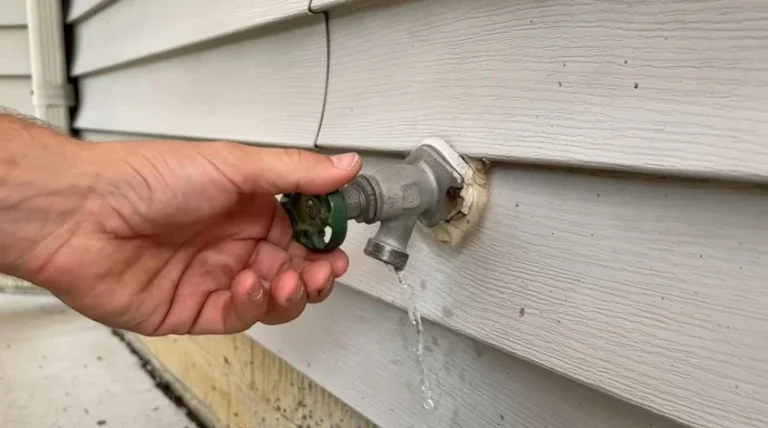
- Outdoor hose bibs and any exterior fixtures
- Washing machine supply lines
- Ice maker lines, if applicable
Leave faucets open slightly through the winter. This gives any trapped water somewhere to expand instead of building pressure inside a closed pipe.
Don’t skip low points and drain valves
Most systems have low-point drain valves specifically for this purpose. If you’re not sure your cabin has been fully drained, standing water left in a low section of pipe is one of the most common causes of a winter freeze split.
Shut off the main · Drain all faucets and lines · Empty the water heater · Blow out or antifreeze the lines · Insulate exposed pipes · Disconnect and drain hoses · Check the crawl space one final time
Step 3: Handle the Water Heater
Your water heater holds a significant amount of standing water that won’t drain on its own just by shutting off the main. Turn off the power or gas supply to the unit first, connect a hose to the drain valve, and run it outside or to a floor drain until it’s fully empty.
If your cabin’s water heater is aging or you’ve had issues with it before, winter shutdown is a good time to have it looked at. You can read more about local water heater service on our water heater page if you’re due for a repair or replacement before next season.
Step 4: Clear Remaining Water With Compressed Air or Antifreeze
Even after draining, some water clings to the interior of pipes. Two common approaches handle this:
- Compressed air: An air compressor attached to the system can blow remaining water out through open faucets. This works well but takes some know-how to avoid pressurizing fittings that aren’t rated for it.
- RV-safe antifreeze: Non-toxic, RV-specific antifreeze poured into drains, toilets, and traps protects the water still sitting in P-traps that gravity alone won’t clear.
Never use automotive antifreeze in a plumbing system — it’s toxic and not intended for this use.
Step 5: Protect What You Can’t Drain
Insulate exposed pipes
Foam pipe sleeves are inexpensive and make a real difference on lines running through crawl spaces, unheated closets, or exterior walls. Pay particular attention to any pipe that runs along an outside wall, since those are the first to feel a hard freeze.
Disconnect and store hoses
A garden hose left attached to an outdoor spigot can trap water in the valve itself, cracking it even if the interior plumbing is fine. Disconnect, drain, and store hoses separately.
Consider heat tape on vulnerable runs
For pipes that can’t be fully drained, or for cabins where someone checks in periodically through winter, thermostatically controlled heat tape adds a layer of protection on the most exposed sections of line.
Step 6: Do a Final Walkthrough
Before you lock up, walk the cabin one more time:
- Confirm the main shutoff is fully closed
- Check that all faucets are open slightly, not fully
- Verify the water heater is drained and powered down
- Look under sinks and in the crawl space for any missed fixtures
- Make sure toilets have antifreeze in the bowl and tank if the cabin will be truly unattended
Turn off the main water supply immediately if it isn’t already off, and avoid using any electrical appliances near standing water. A pipe that’s frozen but not yet split may still be salvageable with careful, gradual thawing — but a cracked or burst line needs a plumber before you turn the water back on. Our emergency plumber team serves cabin owners throughout the Pine and Strawberry area for exactly this situation.
What About Drains, Not Just Supply Lines?
Winterizing focuses mostly on supply lines, but drains deserve a check too. A slow drain going into winter is more likely to develop a stubborn clog by spring, especially if any water sits and freezes near a trap. If you noticed sluggish drains before closing up the cabin, it’s worth addressing before winter rather than after — our drain cleaning page covers what that process typically looks like.
Should You Winterize the Cabin Yourself or Call a Plumbing Company?
A straightforward, single-story cabin with accessible shutoffs is manageable for many owners to winterize themselves. Where it gets trickier is with:
- Older or unfamiliar plumbing layouts
- Crawl spaces that are hard to access or inspect
- A history of freeze damage in previous years
- Uncertainty about whether the system was fully drained
In those cases, having a local plumbing company do a full winterization once, and walking you through what they did, makes future seasons much easier to handle on your own — or gives you the option to have it done professionally every year if the cabin sits empty for long stretches.
Get Your Pine or Strawberry Cabin Winter-Ready
Whether you need a full winterization or help after a freeze, our team knows what high-elevation cabins around Pine and Strawberry need to make it through the season.
Call +1 (928) 260-9425Frequently Asked Questions
At what temperature do cabin pipes actually freeze?
Pipes can start freezing once surrounding temperatures drop into the mid-20s Fahrenheit for a sustained period, especially in uninsulated crawl spaces or exterior walls. At Pine and Strawberry’s elevation, overnight lows reach that range regularly through winter.
Is it enough to just leave the heat on low while I’m away?
Leaving heat on helps but isn’t foolproof on its own. Power outages, propane running out, or a failed furnace can all leave the cabin unprotected. Full winterization, or at minimum draining vulnerable lines, adds a layer of protection heat alone can’t guarantee.
How often should I winterize my cabin if I only visit occasionally?
If the cabin will sit unattended for more than a week or two during the coldest months, it’s worth winterizing each time you leave, or at least having the system fully drained and protected for the entire winter season rather than doing it piecemeal.
Can I use regular antifreeze instead of RV antifreeze?
No. Automotive antifreeze is toxic and isn’t designed for plumbing systems. Only use non-toxic, RV-specific antifreeze rated for potable water systems.
What’s the first thing to check if I suspect a pipe froze overnight?
Check for any faucet with reduced or no water flow, and look for visible frost on exposed pipe sections. If you find a frozen section, shut off the main water supply before attempting to thaw it, and avoid running water until you’ve confirmed there’s no crack or split.
Do I need to winterize if my cabin has a well instead of city water?
Yes, and typically more thoroughly. Well systems often include a pressure tank and pump that also need draining or protection, in addition to the same interior plumbing steps used with a municipal connection.
How much water damage can a single frozen pipe actually cause?
A burst pipe can release a significant volume of water in a short time, especially if it happens while the cabin is unattended and goes unnoticed for days or weeks. That’s part of why full winterization is worth the upfront time compared to the cost and disruption of repairing water damage later.
This guide covers general winterization steps for high-elevation cabins in the Pine and Strawberry area. Every cabin’s plumbing layout is a little different, so if you’re unsure about any step, visit our homepage or reach out directly before the first hard freeze hits.
Contact
Rim Country Plumbing Co.
511 S Beeline Hwy, Payson, AZ 85541
Hours: Mon-Sun 7am-10pm · Emergency service 24/7